
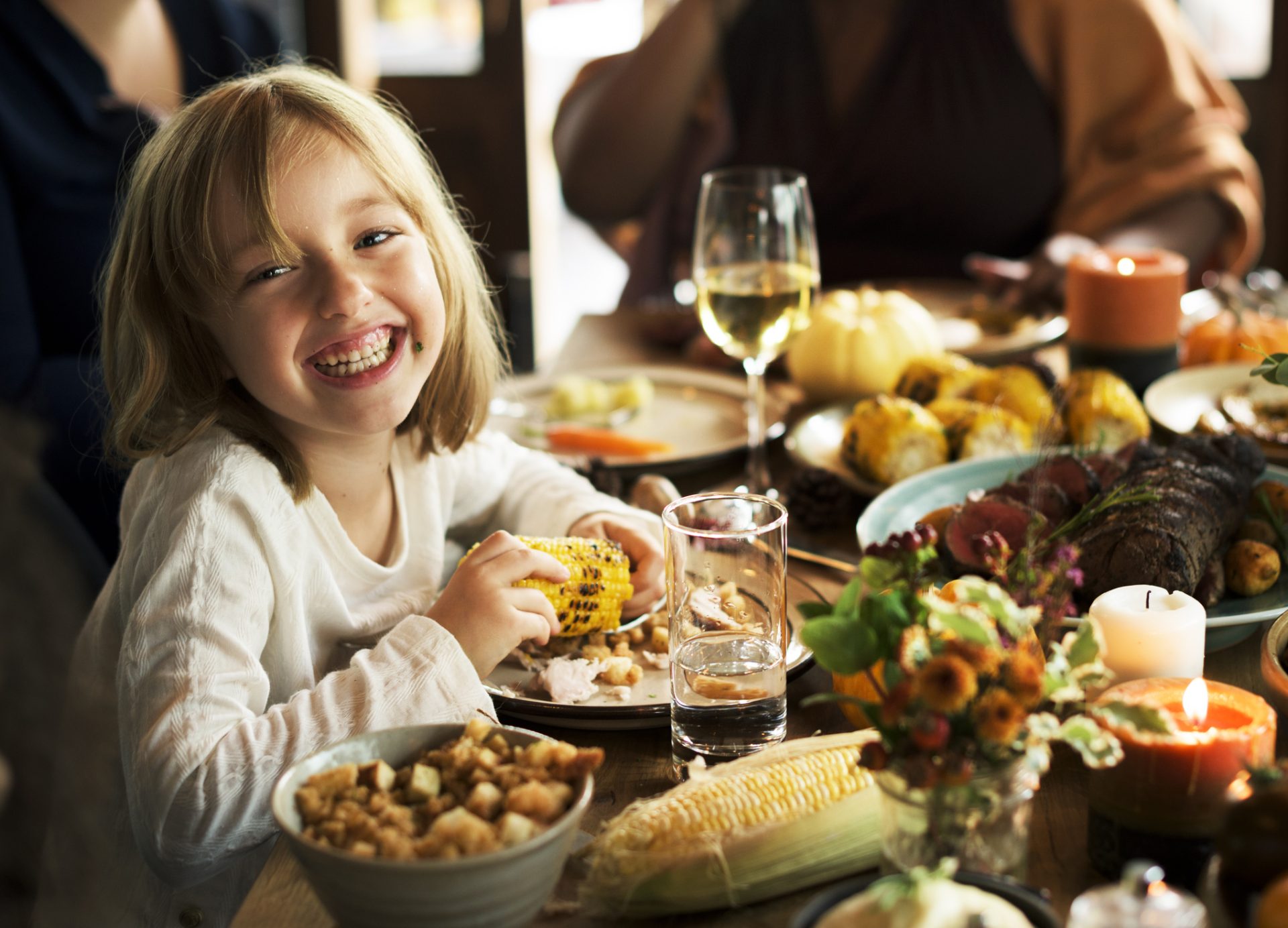
Thanksgiving is supposed to be about gratitude, family and sharing a delicious meal. But when you have a picky eater, it can also come with a side of unsolicited advice.
“Just one bite!”
“They’ll eat when they’re hungry.”
“You ate everything we served you when you were little!”
Sound familiar?
For some families, navigating Thanksgiving dinner means managing more than an unfamiliar menu. It means fielding questions from relatives, worrying about whether your child will eat enough, and trying to keep the peace when someone insists they know exactly how to solve your child’s eating habits.
As a mom of a child with ARFID (Avoidant/Restrictive Food Intake Disorder), I’ve learned that eating isn’t always as simple as putting food on a plate and taking a bite. Even if a kid’s eating challenges look different from ours, we can all benefit from a little more understanding around the dinner table.
The good news? You don’t have to convince your kid to try the stuffing, defend your parenting choices or turn Thanksgiving into a negotiation.
Here’s how to make Thanksgiving dinner more comfortable for picky eaters, less stressful for yourself, and handle well-meaning (and not-so-well-meaning) relatives.
How Do You Make Thanksgiving Dinner Easier for a Picky Eater?
The easiest way to reduce mealtime stress is to take some of the pressure off the food itself.
Thanksgiving often revolves around dishes most kids rarely see the rest of the year. Turkey, stuffing, cranberry sauce, casseroles and vegetables prepared in unfamiliar ways can feel like a lot when a child already has a limited range of comfortable foods.
Try these simple strategies before the big day:
- Include familiar foods. Make sure there’s something your kid feels comfortable eating. It might be a dinner roll, plain potatoes, or something brought from home. It doesn’t have to be a traditional Thanksgiving dish.
- Let the host know you will plate your child’s food. That way, you have more control over portions, selection, safe foods etc. Plus, it’s less stressful when mom or dad serves, rather than when the host serves too much of something.
- Keep portions manageable. A plate piled high with unfamiliar food can feel overwhelming. Let your child have a comfortable amount that works for them.
- Allow foods to stay separate. Some kids prefer their food not to touch. Keeping items separate can make the plate feel more manageable.
- Make room for flexibility. If your child needs a familiar meal, a different serving time, or a quieter place to eat, consider what will help them participate comfortably.
And remember: your kids don’t have to eat the same meal as everyone else for your family to enjoy Thanksgiving together!
Should You Make a Separate Meal for a Picky Eater at Thanksgiving?
For many families, having a reliable food available is a practical way to reduce mealtime stress. For children with significant food restrictions or feeding difficulties, reliable foods can be especially important.
It doesn’t mean you’ve failed, or that your kids can’t enjoy Thanksgiving. In fact, everyone will enjoy the holiday more if there is no stress in the room!
The goal isn’t to create a second Thanksgiving feast. It’s to make sure your child has a realistic option they’ll feel comfortable eating.
Depending on your child’s needs, you could:
- Set aside a familiar food before the meal is served.
- Bring something from home.
- Ask the host about available options ahead of time.
- Pack a backup snack or meal if you know the menu may be challenging.
You don’t need to make a big announcement about your child’s plate, either. A simple “We’ve got their food sorted, thanks!” is usually enough.
How Do You Get a Picky Eater to Try New Foods Without Forcing Them?
Although Thanksgiving may feel like the perfect opportunity to introduce a new food. Everyone is together, there’s plenty to choose from, and Grandma has spent three hours preparing …
but a holiday dinner, surrounded by people watching and commenting, isn’t the best time to encourage a child to experiment with food.
Instead, try these approaches:
- Offer, don’t insist. You can make a new food available without requiring your child to taste it.
“Would you like to try a Brussels sprout?” “No? Okay, I won’t put one on your plate”
- Avoid the “one bite” rule. Even a small bite can feel like a big demand to a kid who finds certain foods difficult.
- Skip food bargaining. Try not to make dessert, screen time or another reward dependent on eating a particular food.
- Avoid praise that puts the spotlight on eating. Comments like “See? You do like it!” can make a kid feel watched or pressured, even when they’re intended kindly.
- Keep the conversation moving. Talk about the holiday, family stories or what everyone is thankful for instead of monitoring every bite. Just enjoy the time with family.
- Let your child decide what to eat from what’s available to them. You can provide food and structure without turning each mouthful into a negotiation. If they only eat a bread roll, that’s fine for today.
Repeated, low-pressure exposure can help some children become more familiar with foods over time. But progress looks different for every child, and trying a new food isn’t a requirement for having a successful Thanksgiving.
The aim is a relaxed meal, not a holiday breakthrough involving Brussels sprouts.
What Should You Say When Grandma Comments on Your Child’s Eating?
Ah, Grandma. She loves your child. She also remembers a time when children were expected to eat what they were served, and questioning the dinner menu wasn’t exactly encouraged.
Sometimes relatives genuinely believe they’re helping. Other times, their comments leave parents feeling judged and kids feeling singled out and embarrassed.
You don’t need to turn Thanksgiving into a debate about parenting philosophies. A short, calm response can acknowledge the comment while making it clear that the subject isn’t up for discussion.
Here are some scripts you can keep handy.
If Grandma says, “They just need to try one bite.”
Try:
“We’re not asking them to try foods under pressure. We’d rather keep mealtimes comfortable.”
Or:
“They can decide whether they’d like to try it. No need to make it a thing.”
If Grandma says, “You were never this picky when you were little.”
Try:
“Kids are different, and their experiences with food can be different, too.”
Or:
“Things have changed a lot in what we understand about eating. We’re doing what works for our family.”
You don’t have to convince a relative to agree with you before you can set a boundary.
If someone says, “I’m not making anything special. They’ll eat what’s served.”
Say:
“We appreciate all the work you’ve put into dinner. We’ll make sure there’s something they can eat, so nobody has to worry about it.”
If someone comments on how much your child is eating
Try:
“Let’s leave their plate out of the conversation and enjoy dinner.”
This is particularly important when comments draw attention to a kid’s appetite, portion size or body. Kids deserve to enjoy a meal without feeling that everyone is keeping score.
If someone tries to bribe your child with dessert
Try:
“We don’t make dessert conditional on eating other foods. They can enjoy it without a negotiation.”
You can be polite and still be clear. A boundary doesn’t have to be a lengthy explanation.
How Do You Handle Rude Comments About Picky Eating Without Starting a Family Argument?
Sometimes a gentle explanation works. Sometimes the same relative makes the same comment every year, as reliably as the cranberry sauce.
If you know a particular family member tends to comment on your child’s eating, it can help to plan your response before arriving.
Start with a private conversation.
If possible, speak to the relative before Thanksgiving dinner. You might say:
“We’re looking forward to seeing everyone. One thing that would really help is if we could avoid comments about what or how much Sophie eats. We’re working on this in a way that supports them, and we’d love your help keeping mealtimes relaxed.”
Use a short, repeatable response.
“Thanks, we’ve got it handled.”
“Please don’t pressure them to eat.”
“We’re not discussing their food choices at dinner.”
Redirect the conversation.
Sometimes a simple change of subject is enough:
“Anyway, tell us about your trip!”
How Do You Make Thanksgiving About Family Instead of Food?
When so much attention goes into preparing the meal, it’s easy to forget that dinner is only one part of the holiday.
If you’re worried about your child’s experience, look for ways to make Thanksgiving enjoyable beyond the plate.
- Let kids help with age-appropriate jobs, like setting the table or arranging napkins.
- Plan a family game, coloring activity or short walk before or after dinner.
- Give kids opportunities to connect with cousins, grandparents and other relatives without every interaction revolving around food.
- Share what you’re thankful for, including the funny, ordinary moments that make family life special.
You can also give yourself permission to let go of the picture-perfect Thanksgiving. Your child may not eat the turkey. Your dinner might run late. Someone may ask an awkward question. None of those things has to define the day.
Add a Little More Grace at the Thanksgiving Table
Family traditions are wonderful, but we don’t have to repeat every piece of advice we grew up with. We can honor the effort that goes into a holiday meal while making room for what we know about kids, food and the many reasons eating can be complicated.
So this Thanksgiving, let’s give parents a break, give kids a little breathing room and leave the food battles off the menu.
