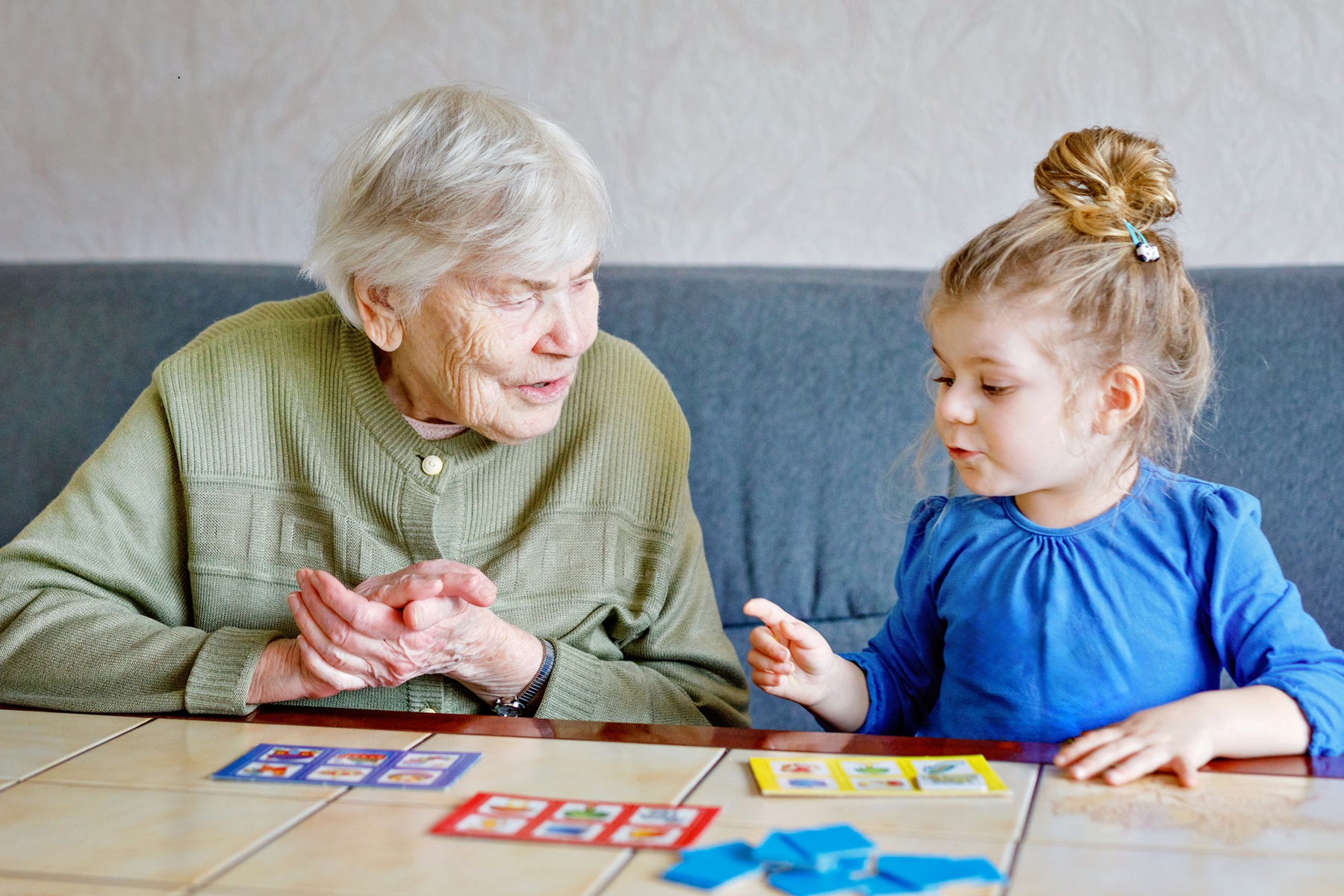
When a grandparent has dementia, kids may notice changes in their memory, behaviour or personality long before they understand what’s happening. Explaining dementia in an age-appropriate way can help them feel less confused, less scared and more prepared for changes in someone they love.
If you’re part of the sandwich generation, hi, hello, I see you juggling kids, aging parents and a cold cup of coffee. 👋🏼 You’re navigating a lot, and figuring out how to talk to your kids about dementia is one more thing on an already very full plate.
The good news? You don’t need a perfect explanation. You need honest, simple answers, room for big feelings and a few practical ways to help your kid stay connected with their grandparent.
Here’s how to explain dementia to kids, support them through difficult moments and look after yourself along the way.
What is dementia, and how does it affect grandparents?
Dementia is an umbrella term for symptoms caused by diseases that affect the brain, including changes in memory, thinking, communication and everyday abilities. Alzheimer’s disease is the most common cause of dementia, but there are other types.
Dementia affects everyone differently. A grandparent might repeat questions, forget familiar names, struggle to follow conversations or behave in ways that seem out of character. These changes can be confusing for kids who remember their grandparent acting differently.
Why should you explain dementia to kids?
Kids often notice more than adults realize. They may overhear conversations, see family members feeling upset or wonder why Grandma doesn’t remember something they did together.
Without an explanation, they may come up with their own reasons for what’s happening.
An honest, age-appropriate conversation can help kids understand that:
- The changes are caused by an illness affecting the brain.
- They didn’t cause the illness, and they can’t catch dementia from spending time with their grandparent.
- Their grandparent may act differently, but they can still share meaningful moments together.
- It’s okay to feel sad, confused, frustrated or even embarrassed.
You don’t have to explain everything at once. Start with what your kid has noticed, answer their questions and let the conversation develop over time.
How do you explain dementia to a child in simple terms?
The best way to explain dementia to a kid is to use clear, reassuring language that matches their age and understanding. Focus on what’s changing, why it’s happening and what it means for your relationship with the person.
Here are a few examples you can adapt to your family.
If your kid asks why Grandma keeps forgetting things:
“Grandma has an illness called dementia. It affects how her brain works, so she sometimes forgets things or gets confused. It’s not her fault, and it’s not yours.”
If your kid asks why Grandpa is acting differently:
“Dementia can change how people think, feel and behave. Grandpa might sometimes say or do things that surprise us. His brain is having a hard time, and we’re learning how to help him.”
If your kid worries that Grandma doesn’t love them anymore:
“Grandma might not always remember your name or something you did together, but that doesn’t mean you aren’t important. We can still spend time together and show each other love.”
If your kid asks whether they’ll get dementia, too:
“Dementia isn’t something you can catch from someone else. Some types can run in families, but having a grandparent with dementia doesn’t mean you’ll develop it.”
For questions about family risk, it’s best to avoid making promises about the future. You can reassure your kid without giving them guarantees you can’t make.
Should you use metaphors to explain dementia?
Metaphors can help younger kids understand an unfamiliar concept, especially when you connect them to something they’ve experienced.
For example:
- A brain having trouble finding information: “Imagine your brain is looking for a book on a bookshelf, but it can’t always find the right one. That’s a little like what happens when Grandma has trouble remembering something.”
- A familiar road becoming confusing: “Grandpa’s brain sometimes has trouble finding its way through information that used to be easy for him.”
- A memory box: Looking through photos or familiar objects can help you talk about shared experiences, even when your grandparent doesn’t remember every detail.
Keep in mind that metaphors are only a starting point. Dementia affects people differently, and no comparison explains every part of the condition.
At what age should you talk to kids about dementia?
You can start talking about dementia as soon as your kid notices something has changed or asks questions. The amount of detail you share should depend on their age, maturity and relationship with the person.
Toddlers and preschoolers (ages 2–4)
Keep explanations short and concrete.
You might say, “Grandpa’s brain is sick, so sometimes he forgets things. We’re going to help him.”
Focus on what your kid might notice during a visit. They don’t need a detailed explanation of the disease.
Younger school-aged kids (ages 5–8)
Kids in this age group may ask why dementia happens, whether it’s contagious or why their grandparent doesn’t remember them.
Use simple explanations, answer questions honestly and repeat reassurance as needed. A picture book, family photo album or familiar activity can help make the conversation easier.
Older kids and tweens (ages 9–12)
Older kids may notice more complicated changes in behaviour, communication and independence. They may also feel scared, embarrassed, angry or uncomfortable talking about what’s happening.
Give them more information when they’re ready, and invite questions without pressuring them to share their feelings immediately.
Teenagers
Teenagers may understand more about dementia but still struggle with grief, frustration or uncertainty. Give them space to talk privately, respect their feelings and avoid expecting them to take on adult caregiving responsibilities.
Remember, age is only a guide. Follow your kid’s questions and emotional cues rather than trying to cover everything in one conversation.
How can you help kids maintain a bond with a grandparent who has dementia?
You can help your kid maintain a meaningful relationship with a grandparent who has dementia by focusing on activities they can still enjoy together, rather than expecting every visit to look the way it used to.
The goal isn’t to recreate the past. It’s to make room for connection in the present.
6 simple ways to stay connected
1. Look through family photos.
Create a photo album featuring family holidays, birthdays, pets and everyday moments. Your kid can share the stories behind the pictures, even if their grandparent doesn’t remember them.
2. Listen to familiar music.
Play songs your grandparent loves or music your family has enjoyed together. You can sing, clap along or simply listen.
3. Make something together.
Drawing, colouring, folding paper or putting together a simple craft gives everyone something to do without relying on conversation.
4. Read a book aloud.
Your kid can read a favourite story to their grandparent, or you can take turns reading together if that feels comfortable.
5. Share a familiar activity.
Depending on your grandparent’s abilities, you could bake, water plants, look at the garden, sort family photos or play a simple game.
6. Keep visits short and flexible.
Choose a time when your grandparent is usually comfortable and alert. Bring a quiet activity, watch for signs of tiredness and be prepared to leave early if needed.
Not every visit will be magical. Sometimes you’ll chat, sometimes you’ll colour for ten minutes, and sometimes the whole plan will fall apart before you get through the door.
That’s okay. A meaningful connection doesn’t have to be a big production.
What should you do if a grandparent with dementia upsets your child?
If a grandparent with dementia says something hurtful, becomes angry or behaves in a frightening way, your kid may feel confused, embarrassed or scared. Start by making sure everyone is safe, then help your kid understand what happened without dismissing their feelings.
When dementia affects the brain, it can contribute to changes in mood, behaviour and how a person responds to others. However, that doesn’t mean your kid has to tolerate behaviour that frightens or hurts them.
How to handle a difficult moment
1. Stay calm and prioritize safety.
If your grandparent becomes agitated or aggressive, calmly create some space and get help if needed. You don’t have to finish a visit or resolve the situation in front of your kid.
2. Explain what happened in simple terms.
Once things are calm, you might say, “Grandma’s illness can make it harder for her brain to understand what’s happening. She got upset, and that wasn’t your fault.”
3. Let your kid have their feelings.
They may feel sad, angry, embarrassed or reluctant to visit again. Resist the urge to tell them they shouldn’t feel that way. Try asking, “What was that like for you?”
4. Reassure them without making promises.
You can explain that dementia may affect behaviour and that the adults are working out how to keep visits comfortable and safe.
5. Adjust future visits.
You might choose shorter visits, meet in a quieter place, bring another adult or plan an activity that feels less overwhelming.
Is it okay to skip a visit?
Absolutely. If a visit is distressing for your kid or your grandparent, taking a break can be the kindest choice.
You can protect your kid’s emotional well-being while still caring deeply about your parent. Those two things aren’t mutually exclusive.
You also don’t have to make every visit a family event. Sometimes an adult-only visit is the better option, and sometimes everyone needs a little breathing room.
How can sandwich generation parents manage dementia caregiving?
Being part of the sandwich generation often means supporting aging parents while raising kids, managing work and keeping your household running. When dementia enters the picture, the emotional and practical demands can feel overwhelming.
You can’t do everything, and you shouldn’t have to.
1. Lower the bar
This isn’t the season for perfect parenting, elaborate meals or a spotless house.
Focus on what matters most today. Everyone being fed, safe and reasonably cared for is a perfectly respectable achievement.
2. Share the caregiving responsibilities
If you have siblings, a partner or other family members who can help, talk about specific tasks rather than asking vaguely for support.
That might mean arranging transportation, managing appointments, preparing meals or taking over one regular visit.
If family support isn’t available, ask your local Alzheimer Society about caregiver programs and community resources.
3. Make space for your own feelings
You can love your parent and feel frustrated by caregiving. You can feel grateful for the time you still have together and grieve the changes happening along the way.
These feelings can coexist.
Talk to someone you trust, consider counselling or look for a caregiver support group. You deserve support, too.
4. Keep your kids’ needs visible
When an aging parent needs more attention, kids may feel that family life has changed or that they’re getting less time with you.
Try to protect a few predictable routines, whether that’s reading together before bed, taking a walk or having a weekly movie night.
It doesn’t need to be elaborate. Consistency matters more than grand gestures.
And if you’ve forgotten the school permission form, ordered pizza again or spent ten minutes looking for the shoes your kid was wearing five minutes ago, you’re in good company.
(For the record, this is one reason we love a good organizational shortcut. A little less time hunting for missing shoes leaves more time for everything else.)
What resources help kids understand dementia?
Books, age-appropriate educational resources and conversations with trusted adults can help kids make sense of dementia. Choose resources that explain brain changes in clear language and encourage questions without making the condition seem frightening.
Here are a few places to start.
Free, trusted dementia resources
- Alzheimer Society of Canada: Helping Children Understand Dementia offers information for families, explanations of common changes and suggestions for helping kids stay connected.
- Alzheimer Society of Ontario: Youth in Action Dementia Supporter Toolkit is designed for kids in Grade 5 and up, with information and activities to help them understand dementia and support people living with it.
- Alzheimer’s Association: Talking to Kids About Alzheimer’s and Dementia answers common questions kids may have and offers practical ways to help them cope.
Books to help start the conversation
A book can give your kid a way to explore difficult feelings without having to talk about their own family right away.
- Wilfrid Gordon McDonald Partridge by Mem Fox is a lovely story about memory and the connection between a young boy and an older woman. It isn’t specifically a dementia guide, but it can open the door to conversations about memories and relationships.
- For books specifically about dementia, ask your local library or Alzheimer Society for age-appropriate recommendations. The right book will depend on your kid’s age and the changes they’re experiencing.
You don’t need to turn reading time into a lesson. Let your kid decide which parts they want to talk about, and follow their lead.
Frequently asked questions about explaining dementia to kids
How do you tell a child that their grandparent has dementia?
Explain that their grandparent has an illness affecting the brain, which can make remembering things, communicating or behaving as usual more difficult. Use simple language, reassure them that they didn’t cause it and invite questions over time.
Should kids visit grandparents who have dementia?
Kids can continue visiting a grandparent with dementia when visits are comfortable and safe for everyone. Prepare your kid for what they might notice, plan an activity and keep visits flexible. If a visit causes distress, it’s okay to shorten it, change the plan or take a break.
What should you say when a grandparent with dementia forgets your kid’s name?
Reassure your kid that memory problems are part of the illness and aren’t a reflection of how much their grandparent cares about them. If appropriate, help by gently introducing your kid again rather than making a big deal of the forgotten name.
What if a child is afraid of a grandparent with dementia?
Listen to their concerns, acknowledge what frightened them and explain the changes in language they can understand. Don’t force physical affection or visits. Give them time, offer reassurance and don’t force them to visit if they feel uncomfortable.
Should you tell kids that dementia will get worse?
Be honest without overwhelming them. You can explain that dementia often changes over time, but the changes are different for each person. Answer questions as they arise, rather than trying to predict everything that will happen.
You don’t have to get it perfect. You just have to show up.
Talking to your kid about dementia isn’t about finding one perfect explanation. It’s about helping them understand what’s happening, reassuring them when things feel confusing and giving them permission to feel whatever they’re feeling.
There will be good visits, difficult visits and days when you barely have enough energy to get everyone out the door.
You can love your parent, support your kid and feel completely overwhelmed by the whole thing. None of those feelings cancel out the others.
So take a breath, ask for help when you need it and remember that small moments of connection count.
You’re navigating a difficult chapter for your whole family. You don’t have to do it perfectly, and you don’t have to do it alone.