
There comes a point when you realize you’ve been putting your kid’s clothes on for years and suddenly think, “Wait. When exactly am I supposed to stop doing this?” Because somewhere between the toddler who proudly puts their pants on backwards and the preschooler who insists they can do everything themselves, kids are supposed to start taking over the dressing process. But when, exactly? And what does “getting dressed independently” actually mean for a 2-year-old, 3-year-old or 5-year-old? The good news: there isn’t one magic birthday when kids suddenly become fully responsible for their wardrobe. Dressing is a collection of skills that develops gradually, and kids can be surprisingly capable in one area while still needing help with another. So if your preschooler can put on their shoes but somehow can’t find the armholes in a T-shirt, you’re not alone. What age should kids start dressing themselves? Most kids start…
You know the routine. It’s cold outside. You know it’s cold outside. Your kid knows it’s cold outside. And yet, when you suggest putting on a coat, you’re met with an emphatic, “I’m not cold.” So you leave the house with a kid wearing a hoodie and the coat you insisted they bring tucked under your arm. Ten minutes later: “I’m freezing.” It’s tempting to chalk it up to stubbornness. But kids can resist wearing coats for several reasons, and understanding what’s behind the behaviour can make those daily battles a little easier. Why do kids hate wearing coats? For some kids, a coat simply doesn’t feel comfortable. Coats can be bulky, stiff, heavy or restrictive, particularly when kids are trying to run, climb, play or get in and out of the car. Some kids are also more sensitive to how clothing feels against their body: a tight cuff, a…
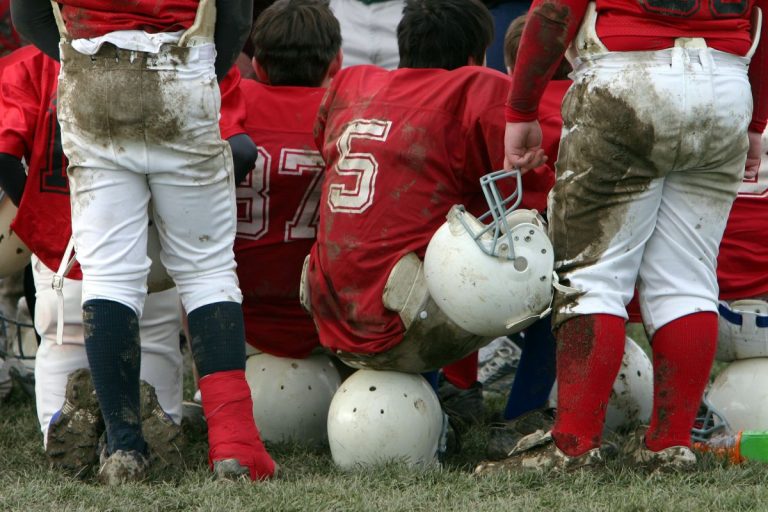
Football is a game of athleticism, aggression, speed, toughness…. and of sweat-soaked equipment that absolutely reeks. As a football parent, you need to be ready to battle the odor, moisture and bacteria after every practice and game. Here are some all-pro tips to help wash your kids’ football gear. How to Wash Your Kids’ Football Helmet For the helmet’s outer surface, avoid using abrasive cleaners or coarse pads that may scratch the finish. Use a soft cloth to wipe off dirt and debris. For football helmets with removable inner pads, detach the padding and set aside. Use a soft cloth, warm water, and a mild detergent to clean the helmet shell and chin strap. To clean the pads, mix warm water with mild detergent and wipe the pads gently using a soft cloth. Let them dry and use a disinfectant spray to neutralize any remaining bacteria. Once all the parts…

A bag of sweaty hockey equipment is like a Holiday Inn for bacteria. When the zipper closes, it creates a damp, dark environment where bacteria will thrive, resulting in the pungent, unpleasant smell that hockey parents know so well. (Sorry to be the one to tell you, but as your young player enters the tween and teen years, it only gets worse!) I play hockey myself and have many hockey-parent friends, so I’ve compiled their best tips for washing hockey gear and keeping it as clean and odor-free as possible. How Do You Keep Hockey Equipment From Smelling? Dry Hockey Equipment After Every Game or Practice The number one tip was unanimous: dry it out. Immediately following each game or practice, every piece of equipment should be removed from the bag and hung up (or at least spread out) to dry. To facilitate this process, I purchased a metal “tree”…

I hit my limit somewhere around question forty-seven on a random Tuesday. My preschooler wanted to know why the moon doesn’t fall down, why we couldn’t just go to the park in our pajamas, and why the dog doesn’t talk. All before breakfast. I did what any exhausted parent does at that point. I went looking for answers (no, not about the dog talking) half hoping someone would tell me it was a phase I could just wait out. What I found surprised me. The why phase is not random, and it is definitely not personal, even though it feels it. It is one of the clearest signs your toddler’s brain is doing exactly what it is supposed to do. But that does not make it any less exhausting in the moment. Here is what is going on, what to say, and how to keep your own sanity intact while…

Is your child struggling to learn to read? Maybe they can read a word one minute but seem to forget it the next. Maybe they guess at words, struggle to sound out simple words, or become frustrated when it’s time to read. You may be wondering: Is this normal for their age? Could my child have dyslexia? What are the early signs of dyslexia? When should I be concerned about my child’s reading? How is dyslexia diagnosed? What can I do to help at home? Dyslexia can be difficult for parents to understand, especially when you’re watching your child struggle with something that seems like it should be getting easier. We asked Heather McNulty, a reading expert, to help explain what dyslexia is, what signs parents should look for, and what you can do if your child is having difficulty learning to read. And even if your child doesn’t have…

I have spent years on both sides of the daycare door. As an early childhood educator, I have wiped noses, sung the same clean up song more times than I can count, and celebrated first steps that happened on my watch instead of at home. As a parent, I have also been the one standing outside that door wondering what really happens once I walk away. That two sided view taught me something important. Daycare teachers wish parents knew so much more about the day-to-day than what fits into a two-minute drop-off or pickup chat. As an early childcare educator here is what I wish parents understood, the small details that matter more than you think, and how better daycare communication can make everyone’s day easier, including your toddler’s. Daycare providers wish parents knew that a calm routine, honest communication, and a little trust in the process go further than any…

Updated May 2026. So you finally got the IEP signed, after weeks (maybe months) of evaluations, meetings, and hard conversations. You were told, “Now the support begins.” But what if the services don’t show up? What if the accommodations are forgotten, or your child is still struggling just as much? This is the part no one prepares you for: what happens after the paperwork is signed. An IEP is just a starting line, not a finish line. You need to know how to implement the IEP after it’s signed. While it’s a powerful legal document, it’s not a magic wand. Signing the paperwork doesn’t guarantee that every support will be delivered as written or that your child’s school experience will immediately improve. The real work often begins after that last signature. For many parents, the biggest surprise is realizing that getting the IEP approved was only step one. The harder…

For months, drop off was easy. Your child waved, walked in, maybe didn’t even look back. Then one random Tuesday, everything changed. Now there are tears, clinging, and a pit in your stomach every single morning. If you’re in the thick of a daycare transition that seems to have appeared out of nowhere, take a breath. You didn’t do anything wrong, and your toddler isn’t broken. This happens to a huge number of families, often right when parents least expect it. This happened to me, and I spent a lot of time doing a deep dive, so you don’t have to… here’s what’s actually going on developmentally, and what you can do about it starting today. Quick answer: Sudden daycare transition struggles are usually caused by a developmental leap, a change in routine, or a new awareness of separation, not by something wrong with the daycare itself. Most resolve within…
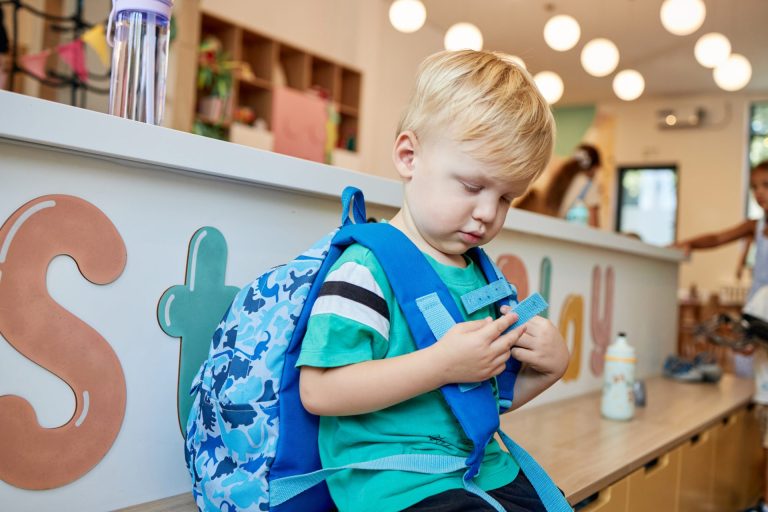
Starting kindergarten is a huge milestone for both kids and parents. One minute you’re buying a tiny backpack and practicing opening lunch containers, and the next you’re waving goodbye at the classroom door. While every school is a little different, one thing is almost always the same: kindergarteners have a lot of stuff. Between backpacks, lunch bags, water bottles, sweaters, indoor shoes, and extra clothes, it’s easy for belongings to get mixed up in a classroom full of little learners. A little preparation before the first day can make the transition much smoother. Before You Shop, Check the Supply List Every teacher has their own classroom routines, so start by reviewing your school’s kindergarten supply list. Many classrooms share supplies like crayons, markers, glue sticks, pencils, and scissors. While it might be tempting to label every single item, your teacher may actually prefer these supplies to stay unlabeled so they…